
 Image 1 of 2
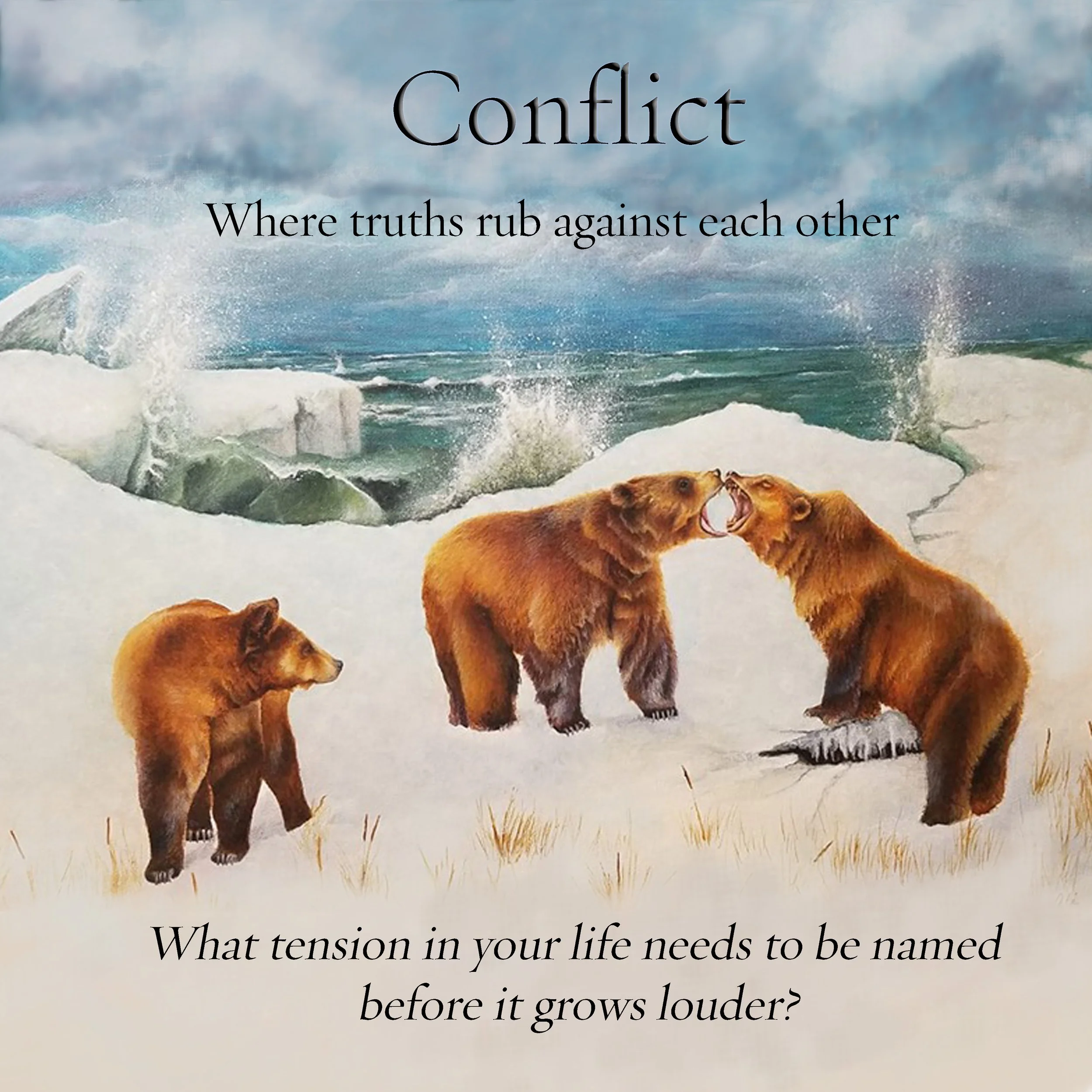 Image 2 of 2
Conflict
In the Quiet Wild, even the land has moods.
Some waters sleep like glass.
Others wake in a fury, hurling ice into the air as if reminding every creature that calm is only one of its many faces. The Great Lakes belong to the latter — ancient, restless, and quick to turn their beauty into warning.
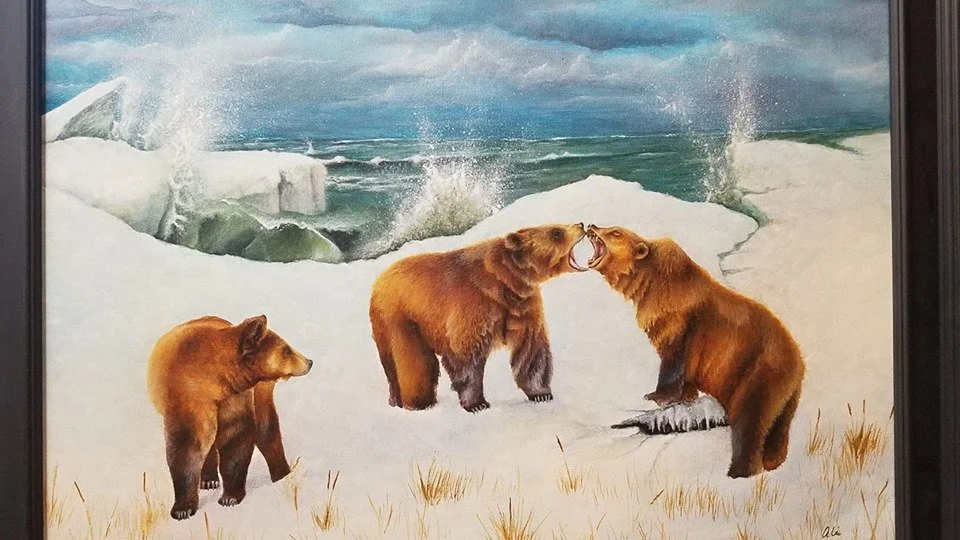
This painting holds three conflicts born from that shifting world.
The first is the oldest: water against ice, two forces locked in a battle of thaw and freeze, each trying to claim the shoreline. It is the kind of clash that can lift whole slabs into the sky, a reminder that nature’s quarrels are larger than us.
The second rises between the two bears — a flare of instinct, fear, or dominance sparked by the chaos around them. When the world shakes, even companions can forget they are on the same side.
The third lives in the bear who stands apart, torn between the pull of loyalty and the call of survival. He feels the danger first, senses the shift in the lake’s breath, and wrestles with the question every creature faces when the world turns volatile:
Do I stay and risk the storm, or step back and save myself?
None of these conflicts are villains.
All of them are truths.
In the Quiet Wild, danger does not arrive alone.
It comes with choices —
to fight what is not the real enemy,
to flee what cannot be outrun,
or to stand in the uncertain space between.
Most of us have lived some version of this moment:
caught between forces larger than us,
caught between each other,
caught between what we owe and what we fear.
Here, on the edge of a lake with a temper,
three bears show us what conflict really is —
not a single story,
but three at once.
This original artwork is the source of one of the Quiet Wild Core Cards.
Conflict
In the Quiet Wild, even the land has moods.
Some waters sleep like glass.
Others wake in a fury, hurling ice into the air as if reminding every creature that calm is only one of its many faces. The Great Lakes belong to the latter — ancient, restless, and quick to turn their beauty into warning.
This painting holds three conflicts born from that shifting world.
The first is the oldest: water against ice, two forces locked in a battle of thaw and freeze, each trying to claim the shoreline. It is the kind of clash that can lift whole slabs into the sky, a reminder that nature’s quarrels are larger than us.
The second rises between the two bears — a flare of instinct, fear, or dominance sparked by the chaos around them. When the world shakes, even companions can forget they are on the same side.
The third lives in the bear who stands apart, torn between the pull of loyalty and the call of survival. He feels the danger first, senses the shift in the lake’s breath, and wrestles with the question every creature faces when the world turns volatile:
Do I stay and risk the storm, or step back and save myself?
None of these conflicts are villains.
All of them are truths.
In the Quiet Wild, danger does not arrive alone.
It comes with choices —
to fight what is not the real enemy,
to flee what cannot be outrun,
or to stand in the uncertain space between.
Most of us have lived some version of this moment:
caught between forces larger than us,
caught between each other,
caught between what we owe and what we fear.
Here, on the edge of a lake with a temper,
three bears show us what conflict really is —
not a single story,
but three at once.
This original artwork is the source of one of the Quiet Wild Core Cards.